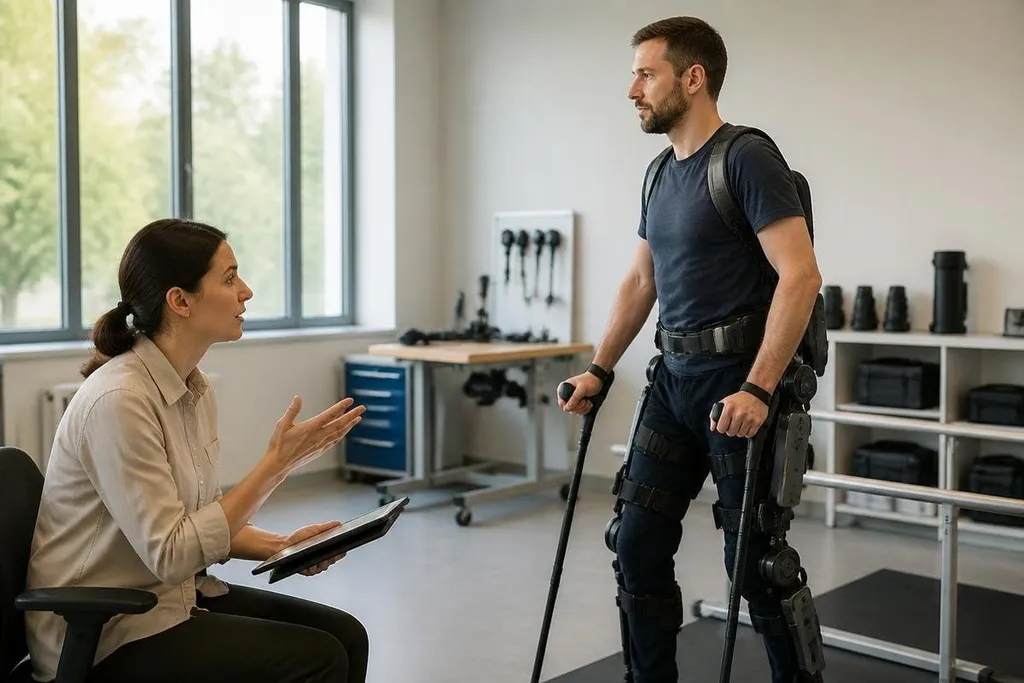
A powered exoskeleton can add motor support to a person’s movement. A robotic prosthetic can replace lost function. The hard questions begin when these systems move from medical care into work, sport, or daily life.
- Consent must stay active: a person should know what the system does and be able to stop using it.
- Access may shape opportunity: expensive robotic support could widen the gap between people who can pay and those who can’t.
- Human control needs a clear limit: the person wearing the system should know who can change its settings or collect its data.
Treatment and advantage are different questions
Robotic limbs and exoskeletons can help restore movement after injury or illness. In that setting, the main concern is fit: does the system help the person carry out tasks with less strain and more control?
The question changes when a system gives a person abilities beyond the usual human range. A powered suit used for lifting could affect hiring rules, workplace pressure, and safety checks. A robotic arm controlled by muscle signals could change what counts as a normal task at work.
The device may be voluntary on paper but difficult to refuse in practice. If a workplace rewards workers who wear an exoskeleton for longer shifts, consent starts to look less free. They may face a choice between using the system and losing income.
Who controls the machine?
A person using robotic augmentation needs control that they can understand. That includes the start and stop controls, the force limits, the data recorded by sensors, and the process for changing software settings.
This matters because a robotic system can affect the body before a person has time to react. A motor may add force to a joint, a controller may limit movement, or a sensor may misread the user’s intent. The wearer needs a clear way to stop the motion and get help when the system behaves badly.
Responsibility also needs a named owner. If a system causes harm, the answer can’t rest on a vague claim that the user, maker, hiring company, and software supplier all share blame.
Each party needs a defined duty before the machine enters a workplace or public setting.
Body signals raise a harder question: who may collect them, and who can stop the system from using them? Robotics coverage from Robot24.com can place the sensor, consent terms, and failure response beside each claim before the discussion turns to data rights.
Data from the body is not ordinary data
Many augmentation systems need information about muscle activity, posture, motion, or brain signals. That information can reveal more than the action itself. It may show fatigue, pain, hesitation, or a person’s response to a task.
Users should know what the system records, where the data goes, and how long it stays there. A workplace should not collect body data for one task and later use it to rank workers without a new agreement.
Security matters too. A stolen password can be changed. A bad command sent to a robotic device may move a person’s body. Access controls, local stop functions, and clear records of software changes should be treated as part of the safety plan.
Access cannot be an afterthought
Robotic augmentation may cost more than the people who need it can pay. Medical coverage, public services, and workplaces may each set different rules for who receives support and who pays for repairs.
That creates a risk beyond unequal access to a product. If one group gains safer tools for physical work, education, or communication, the gap can affect jobs and public life. A fair policy should examine repair costs, training time, replacement parts, and support for people who cannot use the standard design.
The strongest case for these systems comes from clear need and free choice. I’d reject any workplace policy that makes robotic body support a hidden condition of keeping a job.
A practical check before deployment
Use this checklist before approving a robotic augmentation system:
- Name the purpose: write down the task the system must support and the limit it must respect.
- Test free choice: give the person a real option to refuse, pause, or stop using it without punishment.
- Set the stop rule: place a physical stop control where the wearer can reach it during a fault.
- Limit body data: collect only what the system needs, and state who may access it.
- Assign responsibility: record who handles injury reports, repairs, software changes, and training.
- Review access: include purchase, fitting, maintenance, and replacement costs in the decision.
The next test for human augmentation robotics is not how much force a machine can add. It is whether people can say yes, say no, and stay in control after the system becomes part of the work.